Purpleheart
Peltogyne spp.
Hardness
Very hard; tough on tools but extremely wear-resistant.
Overview
Vivid purple, extremely hard and dense. A showpiece accent wood, striking, but tough on tools and on your patience.
Commonly built
- Inlay & marquetry accents
- Turned pens
- Knife handles
- Jewelry box stripes
- Pool cues
Appearance
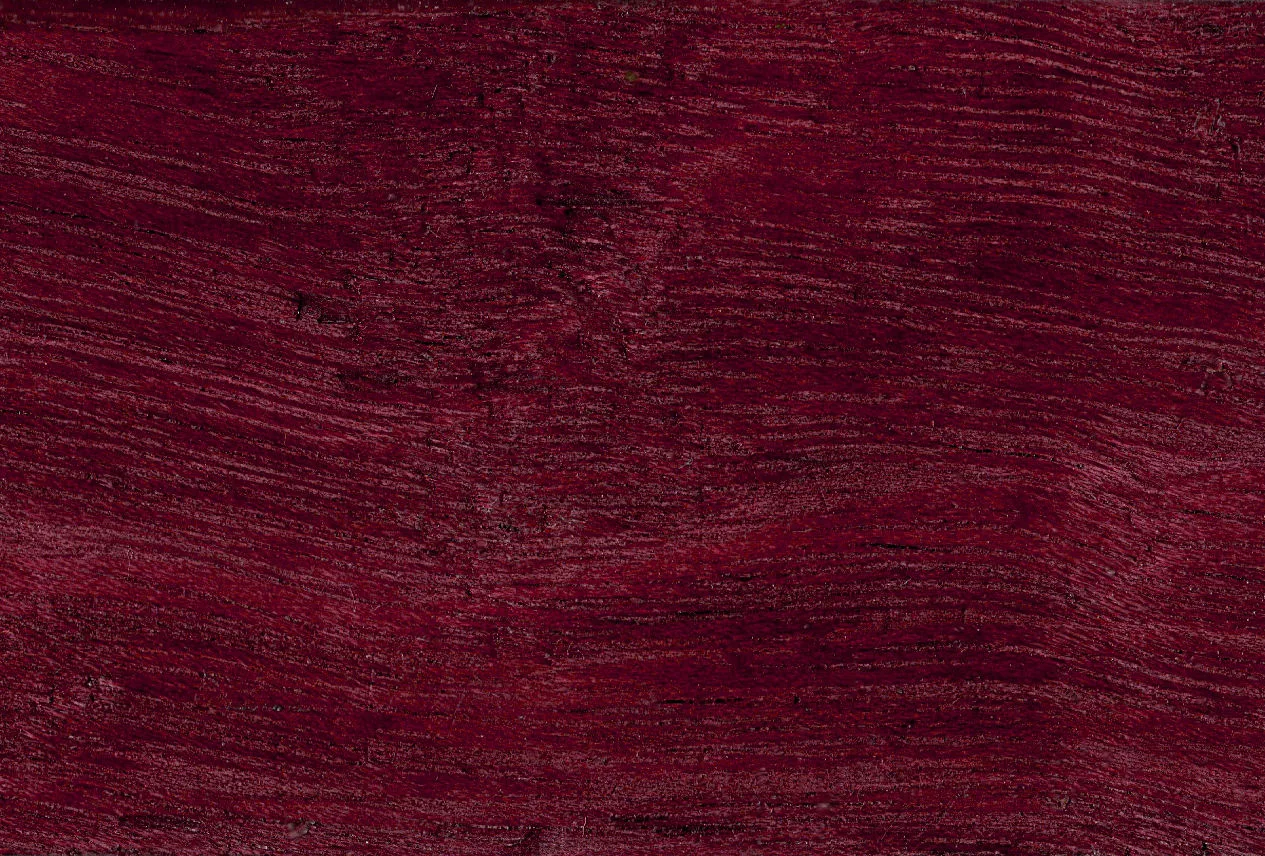
Dull brown when cut, turning vivid purple on exposure to light.
Recommended uses
Uses to avoid
Similar species
Comparable on hardness, type, and workability, useful when this species isn't available.
Working notes
Dulls blades fast and can gum up with resin under heat. Cuts brownish then oxidizes to purple with light exposure; a UV-blocking finish slows the eventual brown-out. Use sharp carbide.
Wood movement
A 24-inch-wide flatsawn purpleheart panel moves roughly 0.31 inch across a typical seasonal humidity swing (about 6% to 12% moisture content). Use the wood movement calculator to run your own board size and moisture range.
How much does Purpleheart move? → See flatsawn vs. quartersawn figures and a worked example.
Common questions
How hard is Purpleheart?
Purpleheart has a Janka hardness of 2520 lbf, a measure of how well it resists denting and wear.
Is Purpleheart suitable for outdoor use?
Purpleheart is best used indoors; it is not naturally suited to sustained outdoor or wet conditions.
How easy is Purpleheart to work with?
Purpleheart has Fair workability for cutting, shaping, and joinery.
How much does Purpleheart move seasonally?
A 24-inch-wide flatsawn purpleheart panel moves roughly 0.31 inch across a typical seasonal humidity swing (about 6% to 12% moisture content).
Community photos
Real photos from woodworkers who've used purpleheart, reviewed before they appear here.
Loading…
Wood data varies by source and sample. How we source and review our data.