Honey Locust
Gleditsia triacanthos
Hardness
Hard and durable; stands up to wear and traffic.
Overview
Hard, strong, and warmly colored, often confused with black locust but less rot-resistant. A handsome, underused furniture wood.
Commonly built
- Furniture
- Bowls
- Flooring
Appearance
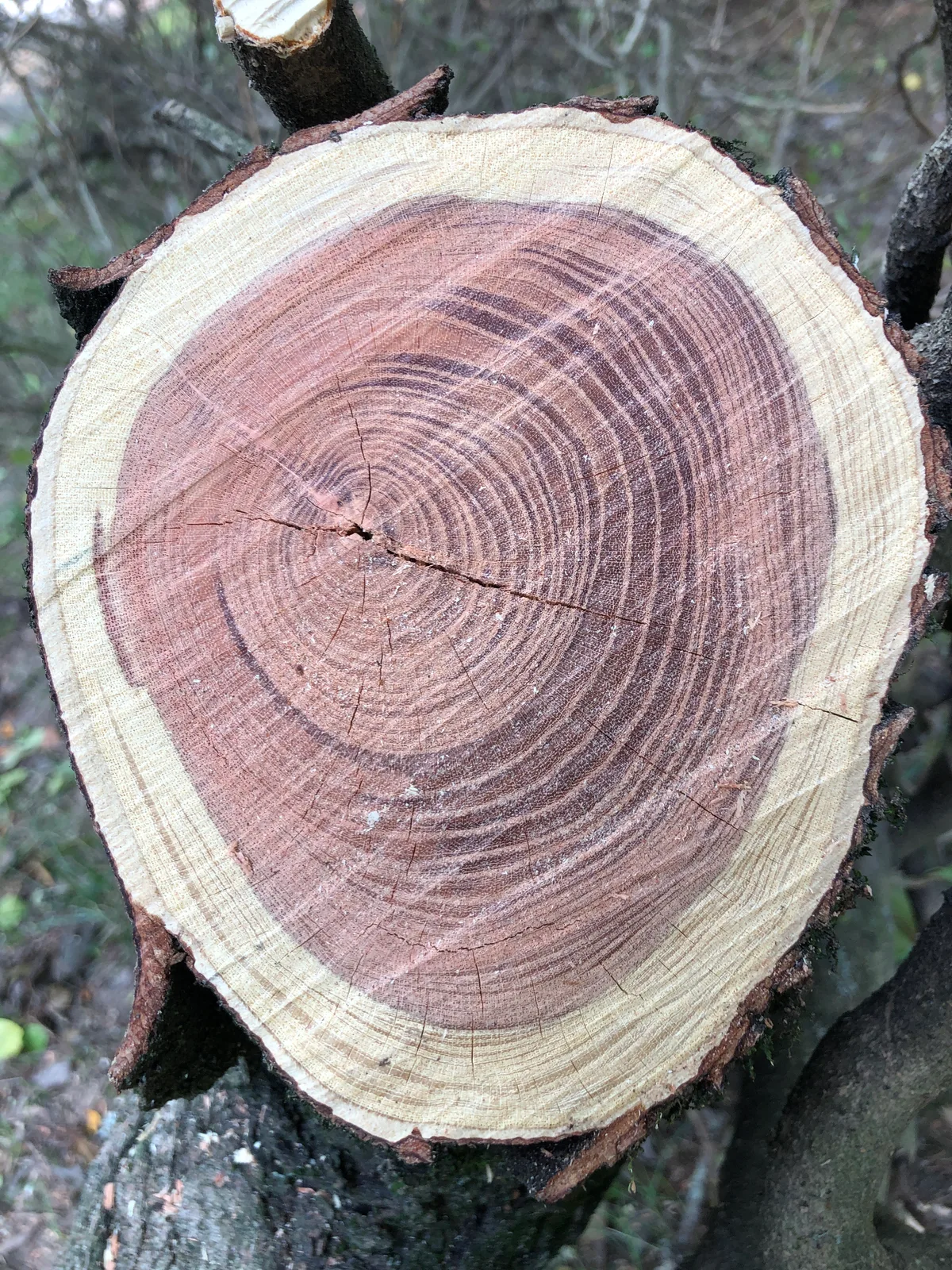
Reddish to orange-brown heartwood with a bright, lustrous figure; resembles a warm, reddish ash or oak.
Recommended uses
Uses to avoid
Similar species
Comparable on hardness, type, and workability, useful when this species isn't available.
Working notes
Hard and dense; works with reasonable effort and sharp tools. Takes a beautiful finish. Less decay-resistant than black locust, not for ground contact.
Wood movement
A 24-inch-wide flatsawn honey locust panel moves roughly 0.33 inch across a typical seasonal humidity swing (about 6% to 12% moisture content). Use the wood movement calculator to run your own board size and moisture range.
How much does Honey Locust move? → See flatsawn vs. quartersawn figures and a worked example.
Common questions
How hard is Honey Locust?
Honey Locust has a Janka hardness of 1580 lbf, a measure of how well it resists denting and wear.
Is Honey Locust suitable for outdoor use?
Honey Locust is best used indoors; it is not naturally suited to sustained outdoor or wet conditions.
How easy is Honey Locust to work with?
Honey Locust has Fair workability for cutting, shaping, and joinery.
How much does Honey Locust move seasonally?
A 24-inch-wide flatsawn honey locust panel moves roughly 0.33 inch across a typical seasonal humidity swing (about 6% to 12% moisture content).
Finishing notes
Dense and takes a fine polish; the reddish-brown heartwood finishes beautifully under a clear film finish or oil. Open, ring-porous grain benefits from filler for a smooth surface. Takes stain fairly evenly. A handsome, underused furniture wood that shows well under a simple clear finish.
Community photos
Real photos from woodworkers who've used honey locust, reviewed before they appear here.
Loading…
Wood data varies by source and sample. How we source and review our data.